2025 Year in Review
- Protenga Admin

- Dec 29, 2025
- 4 min read
2025 was not just another year of growth at Protenga. It was the year the conversation decisively changed. The industry moved past asking “Why insects?” and began asking a far more practical question: “How quickly can this be built, deployed and integrated?”
As the year draws to a close, the reflection is less about how far Protenga travelled, and more about what was constructed. From operational farms in Johor to industry stages across Asia and beyond, the narrative has shifted. The novelty phase is over. The period of testing whether the market is ready is behind us. 2025 marked the transition into bio-industrial reality and the large-scale replication of the Smart Insect Farm.
What follows are the moments that defined the year.
From validation to integration
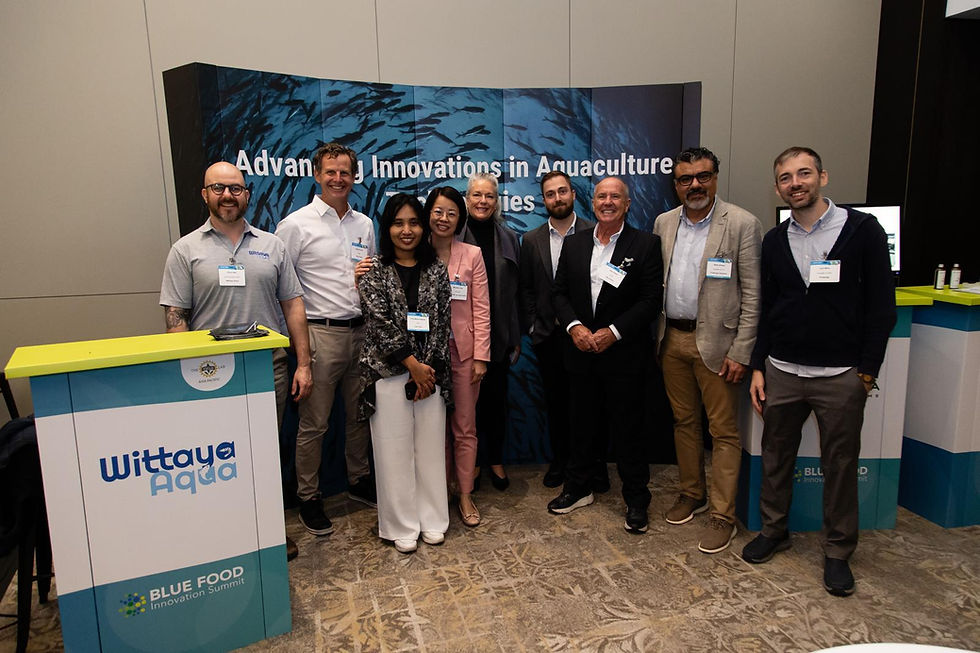
The year opened with a circuit of industry engagements. At VIV Asia, Bangkok, and the Blue Food Innovation Summit, London, conversations were no longer centred on explaining the Black Soldier Fly. That foundation is now well understood. Most partners already recognise the nutritional, environmental and commercial value of insect protein.
However, what has changed is the depth of discussion, and the focus is now on integration. How does insect protein fit into existing feed supply chains? How does frass complement conventional fertilisers? How can waste streams be reliably converted into products that meet regulatory, quality and volume requirements?
Protenga increasingly sits at that intersection, supplying not just products, but the technology and operating systems that allow partners to produce them themselves.
By June, the company was deeply engaged in technical and regulatory discourse at the Asian Insect Industry and Research Forum in Universiti Malaya, Kuala Lumpur. Team members were present throughout the programme, contributing to discussions on quality assurance, certification, risk perception and export readiness. This presence reflected Protenga’s role not only as a producer, but as an active participant shaping how the regional insect industry matures.

These conversations continued across borders, from aquaculture discussions in Europe to sustainability and bioeconomy dialogues at FAO engagements in Bangkok. The emphasis was consistent: insects offer practical solutions that connect waste management, feed security and regenerative agriculture.
At AgriMalaysia and PIPOC, the message became even more concrete. Protenga was no longer explaining what insect frass is, but showing plantation and agriculture players how to close their own loops using it. Protenga stands as a waste-to-value partner for palm oil mills in Southeast Asia and beyond.

It was also the year the Smart Insect Farm scaled.
If earlier years were about designing and stress-testing the Smart Insect Farm, 2025 was about execution. The signing of new SIF agreements in different regions of Malaysia marked a turning point for the business and for the industry.


The Smart Insect Farm model challenges the assumption that scale requires a single, centralised mega-facility. Instead, it enables decentralised, data-driven production located directly at feedstock sources, particularly palm oil mills. This approach reduces logistics, stabilises inputs and transforms circular economy theory into operational infrastructure.
For Protenga, this was not just a commercial milestone. It was proof that insect technology can be embedded into existing industrial ecosystems in a way that is replicable, bankable and operationally disciplined.
Innovation that serves function
Sustainability only matters if it performs. Throughout 2025, Protenga continued to push beyond baseline insect production.
Research into fermented insect protein moved from concept into application, demonstrating clear benefits for gut health and feed efficiency in pets and livestock. This work reflects a broader shift towards value-added insect ingredients rather than commodity outputs. Read our published paper here.
On the agriculture side, engagement at the International EM Conference and AgriMalaysia reinforced the importance of frass as a soil input. Regenerative outcomes, microbial activity and long-term soil health are now part of mainstream agricultural conversations, and Protenga’s frass sits firmly within that future.
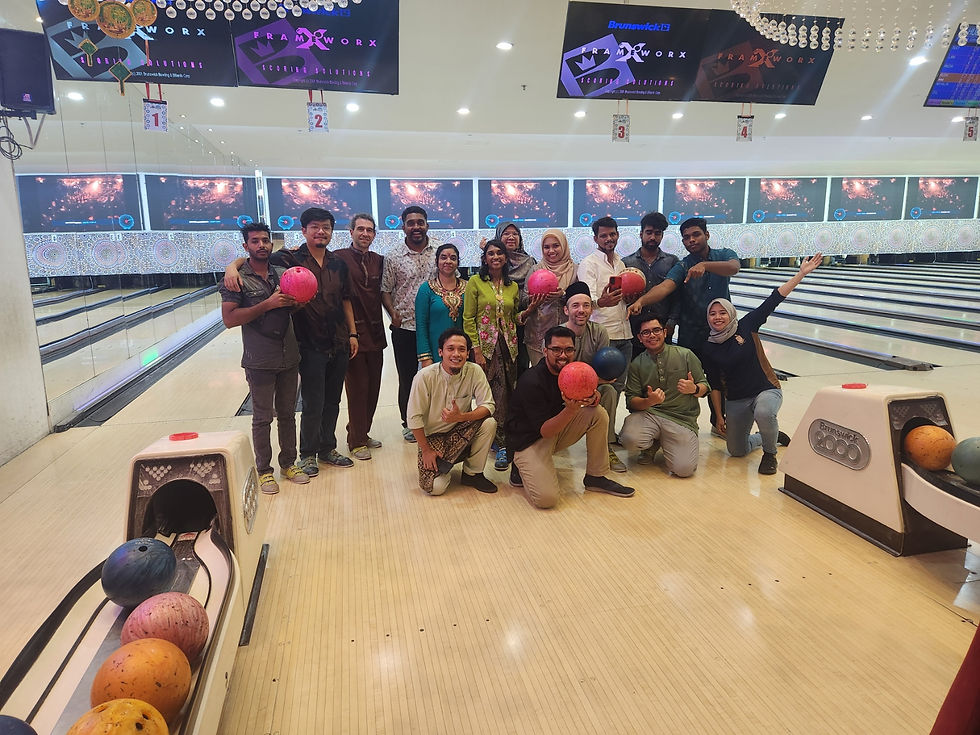
To us, innovation was not confined to laboratories and conference halls. The team continued to experiment and communicate creatively. Chinese New Year celebrations became an opportunity to share product stories and team culture. Internal trials with dried BSF larvae to make coffee thicker highlighted the versatility of BSF larvae and hinted at longer-term possibilities in food and material innovation. We’re not a food company (yet?), we’re just doing these for fun.


These small unwinding moments matter. They signal curiosity, cohesion and a company culture that understands innovation as both technical and human.
Momentum and market confidence
Growth requires support, and 2025 brought meaningful validation. Participation in GrowMatch and attending investor events helped accelerate engineering work and project pipelines. These were not symbolic milestones, but practical enablers that allowed the company to move faster and with greater confidence.
November was our busiest month so far. We were engaged at the China Insect Protein summit in Guangzhou, PIPOC (Palm Oil Conference) in Kuala Lumpur and FAO forum in Bangkok demonstrated that insect protein and circular bio-solutions are no longer fringe topics. They are central to discussions on food security, feed resilience and climate adaptation.
Protenga is no longer observing this shift from the sidelines. It is contributing to the standards, systems and commercial models that will shape the sector in the decade ahead.
Closing thoughts
Protenga is Making Insects Work for YOU, building infrastructure for a circular economy that works economically, biologically and at scale.
2025 confirmed that the technology is ready, the market is engaged and the impact is measurable. As the company looks ahead to 2026, the ambition is to lead responsibly within it, building 100 farms by 2030.
The loop is closing. And this is only the beginning. Enjoy a small video clip of our moments this year.
Happy holidays, and see you in the year ahead.



Comments